Adaptive Compute for Snowflake: One of the Most Practical Announcement from Summit 2026
.png)
Audio Highlights
This component uses custom JavaScript to open and close. Custom attributes and additional custom JavaScript is added to this component to make it accessible.
Video Highlights
This component uses custom JavaScript to open and close. Custom attributes and additional custom JavaScript is added to this component to make it accessible.
For years, Snowflake users have had to balance two competing goals: getting the performance they need without overspending on computing.
At Snowflake Summit 2026, Snowflake introduced Adaptive Compute - a capability that should finally make warehouse sizing and performance tuning far less of a manual exercise.
What is Adaptive Compute for Snowflake?
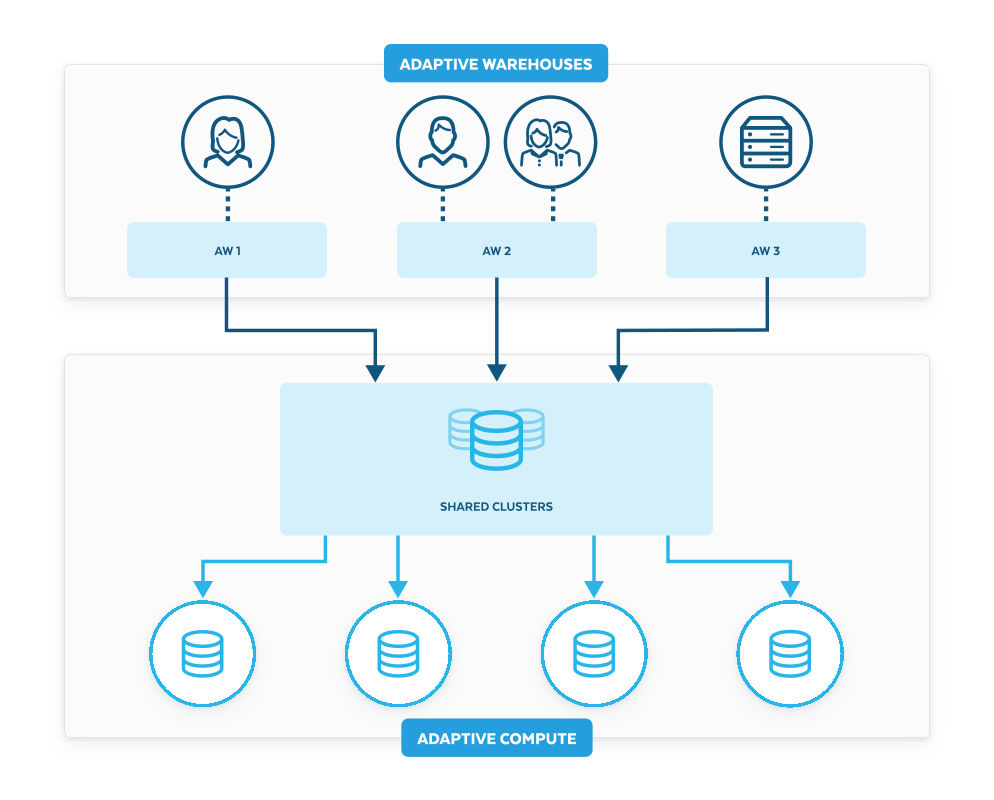
Adaptive Compute is a new self-sizing compute model that automatically allocates the right number of resources to each query or workload. Instead of choosing warehouse sizes and continuously tuning compute settings, Snowflake dynamically adjusts compute behind the scenes based on workload requirements. You no longer have to decide whether XS will be enough. What I need to do when there are peaks and usage grows by 100%.
In simple terms: small queries use only the resources they need, while larger and more demanding workloads can automatically receive additional compute when required.
Why it matters
This is more than just another infrastructure enhancement.
For many organizations, warehouse sizing, performance troubleshooting, and cost optimization consume significant engineering effort. Adaptive Compute shifts more of that responsibility to the platform itself.
The potential benefits are clear:
- Better performance consistency across workloads
- Reduced need for manual warehouse tuning
- More efficient compute utilization
- Simplified operations for data teams
- Improved balance between cost and performance
For teams managing dozens (or hundreds) of workloads, that means fewer sprint hours burned on tuning and more on actual business problems. Personally, I’ve seen engineering teams spending 20% of their sprint time on attending sizing related issues. That’s not a niche problem; it’s nearly universal.
Key Highlights from Summit 2026
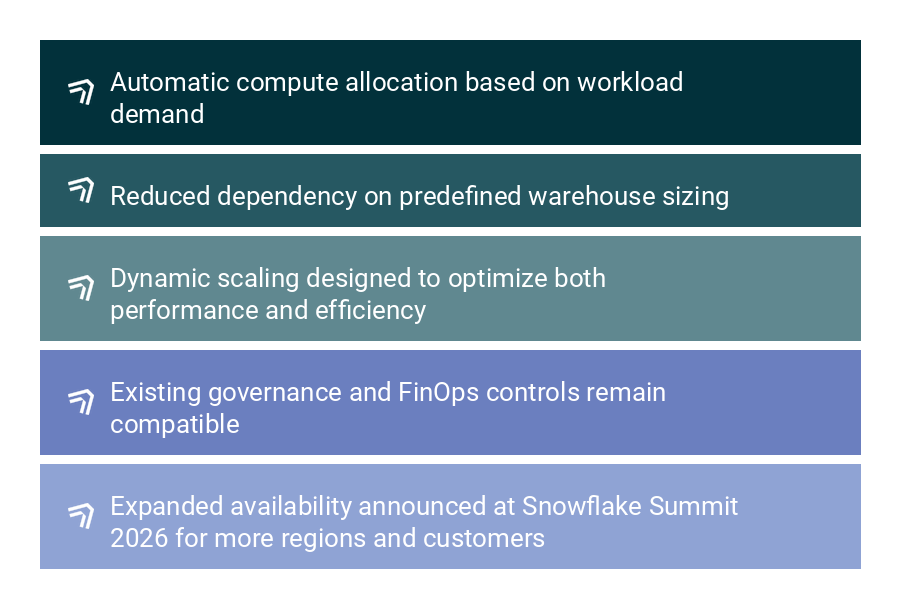
What stands out is that Adaptive Compute isn't trying to add another layer of complexity. It's doing the opposite.
While many Summit announcements focused on AI agents, semantic layers, and automation, Adaptive Compute is addressing a challenge every Snowflake customer understands getting the right performance at the right cost.
My Perspective
Adaptive Compute is a quiet but powerful enabler of more flexible data workflows and a significant step toward broader business-user adoption. When implemented with the right governance and controls, it empowers teams to explore data more freely, uncover insights faster, and scale their workloads without costs spiraling out of control.
In many ways, it helps remove the traditional trade-off between agility and efficiency, allowing organizations to encourage experimentation while maintaining operational discipline.
Adaptive Compute is one of several announcements from Snowflake Summit 2026 worth a closer look. In the next posts in this series, I'll be covering the features that stood out, and what they mean in practice.
Meet the authors

.jpg)





.png)





.png)


.png)
.png)










.png)