FabCon 2026: Microsoft Fabric Is Becoming the Foundation for Enterprise AI
Audio Highlights
This component uses custom JavaScript to open and close. Custom attributes and additional custom JavaScript is added to this component to make it accessible.
Video Highlights
This component uses custom JavaScript to open and close. Custom attributes and additional custom JavaScript is added to this component to make it accessible.
What Barcelona told us about the semantic layer, governance, trusted data, the operating model around Fabric, and the platform foundations enterprise AI will increasingly depend on.
-------
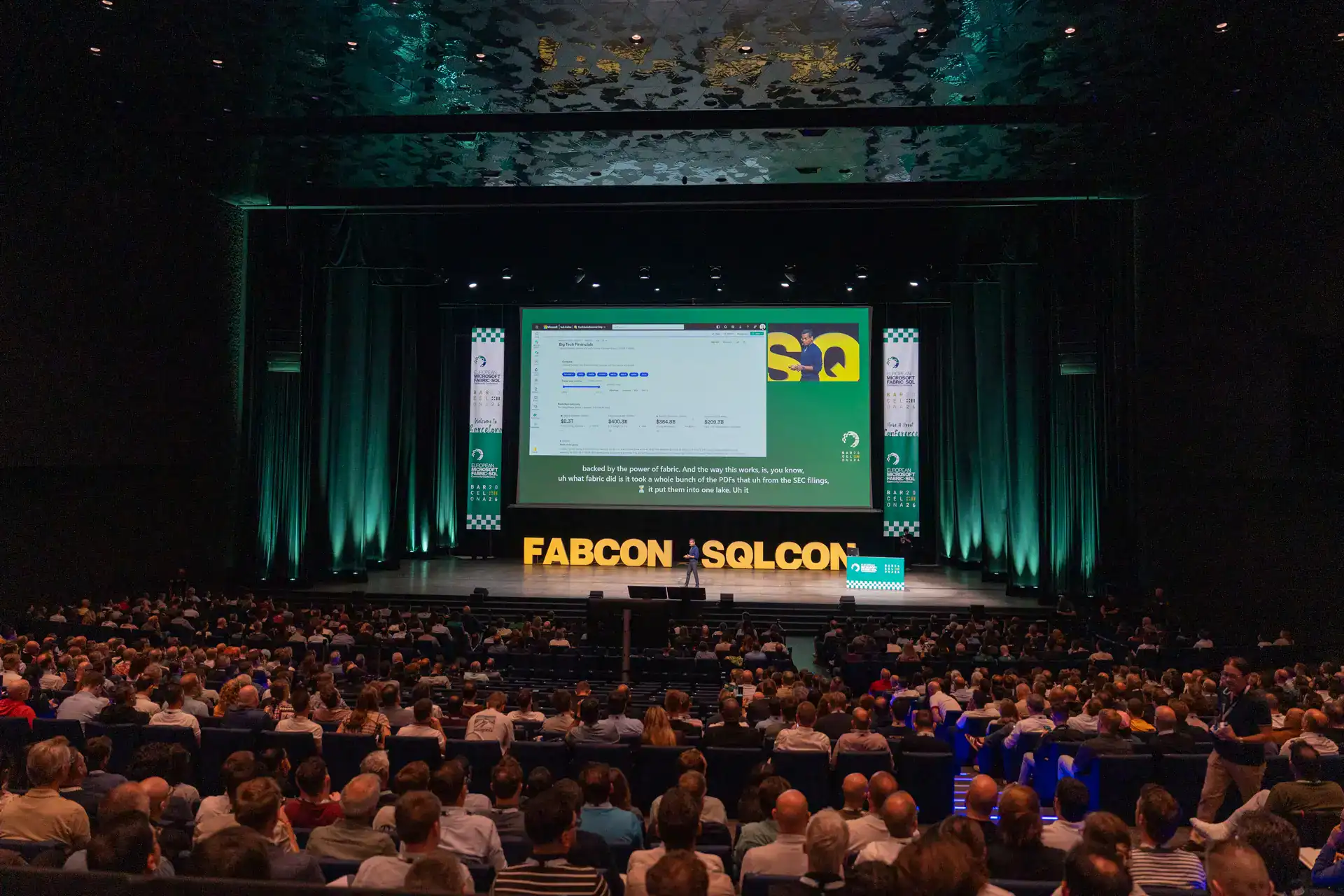
The European Microsoft Fabric + SQL Community Conference 2026 brought nearly 5,000 data professionals to Barcelona. There were plenty of announcements, but what stayed with us was how clearly Microsoft's data and AI strategy is coming together. Fabric is becoming more than a collection of analytics services. It is increasingly a common platform for data, AI, engineering and business applications.
At Partner Day, we spoke with Microsoft teams and other partners from around the world about what that shift means in practice. The conversations quickly moved beyond product features to familiar implementation challenges. Organizations are increasingly focused on ownership, governance, operating models and long-term architecture decisions needed to scale Fabric across business units and integrate it into their existing data environments.
Fabric's technical scope is expanding faster than the operating practices needed to support it in many organizations. The platform now supports a much broader range of engineering, analytics, application and AI scenarios. The harder part is deciding who owns these capabilities, how they should be governed and how they will be maintained once they become part of everyday business operations. Governance must strike a balance between maintaining control and enabling agility, while architectural decisions that appear insignificant during a pilot may become increasingly difficult to reverse as adoption grows.
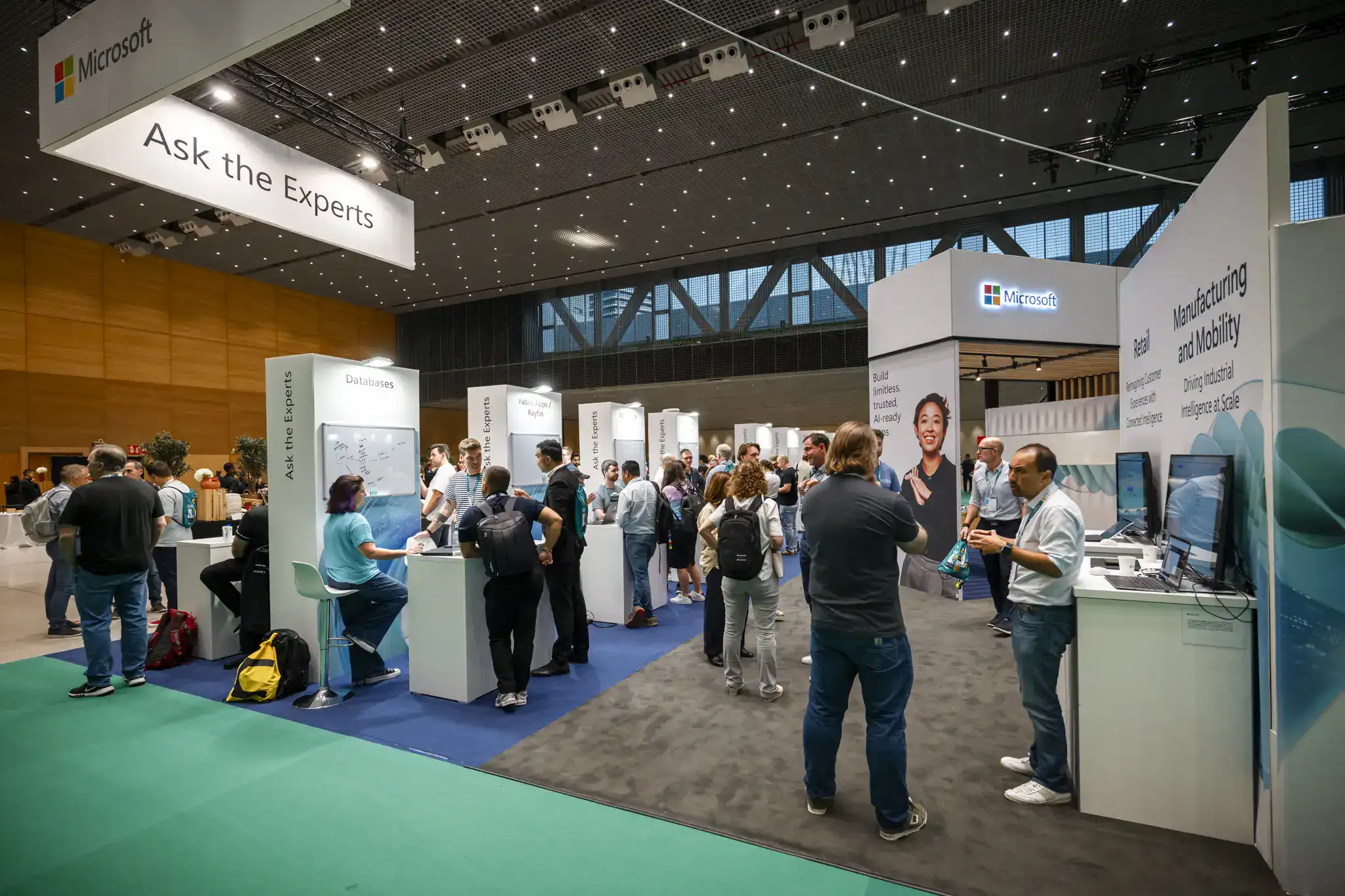
The keynote laid out the broader direction. Product sessions and Ask the Experts discussions helped us examine the technical details behind it. A consistent theme emerged: enterprise AI needs trustworthy data, shared business definitions and an operating model that can support both.
The announcements fit that picture. OneLake is opening up to more engines and platforms. Fabric IQ and the semantic layer are becoming more important as AI agents need business context, not just access to tables. Fabric Apps and agentic capabilities extend the ways people can work with that context. At the same time, Microsoft is investing more seriously in policies, observability and deployment tooling to address the practical demands of running Fabric at scale. Some of these capabilities are ready to influence platform and architecture decisions today. Others, including Semantic Views and more autonomous engineering experiences, are still useful mainly as signals of where Microsoft is taking the platform.
Shared business context becomes AI infrastructure
An AI system can access the right table and still misunderstand the business question. That is why the semantic layer moved much closer to the center of the AI discussion in Barcelona. Fabric IQ now brings Power BI semantic context into Microsoft 365 Copilot experiences, including Copilot Chat and Cowork, so answers can draw on established measures, relationships and business definitions.
For many organizations, that context already exists. Years of work in Power BI have produced definitions for revenue, margin, customer status and other measures that people rely on. When those definitions are consistent and have clear owners, they give an AI assistant a much stronger basis for answering questions than raw columns alone. When definitions differ between teams, conversational analytics makes those inconsistencies more visible, not less.
Microsoft also presented an early look at Semantic Views, designed to define governed business metrics closer to the data in OneLake and make them reusable across platform. The idea is promising, but important questions remain. Teams still need to understand how Semantic Views will be created, maintained and governed, how they will coexist with semantic models and ontologies, and which workloads will consume them. For now, Semantic Views are a development worth following as Microsoft continues to mature its capability and clarify how it will work in practice.
Another important announcement was IQ sharing, a new preview capability designed to securely share business context across teams, business units, partners and organizations. Initially, it supports tables and files, including Markdown instructions for AI agents and RDF ontologies, with native support for Fabric IQ ontologies and semantic models planned. While still at an early stage, IQ sharing points toward a model where business context can travel alongside data and be reused across different applications and AI experiences.
This broader push toward openness also explains Microsoft's involvement in Apache Ossie (incubating), an open initiative to establish a vendor-neutral standard for exchanging semantic metadata across analytics, BI and AI platforms. Working alongside Snowflake and other industry participants, Microsoft is helping develop a common approach to sharing business definitions across technology ecosystems. The standard and its supporting tools are still evolving, but the potential is significant: organizations could eventually reuse more of their existing semantic investments without having to recreate business logic in each platform.
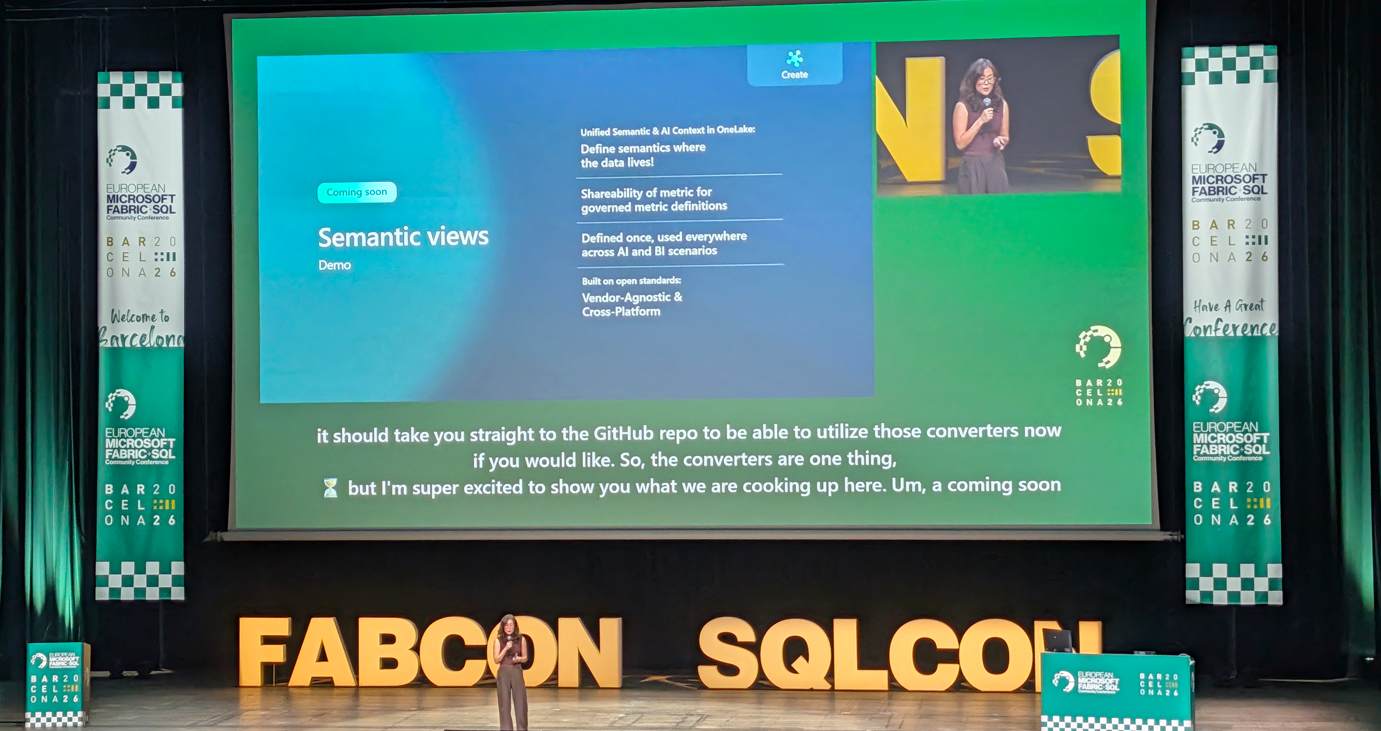
Together, these developments point toward a future where business context becomes a reusable enterprise asset rather than something tied to individual tools. Power BI semantic models remain the most mature foundation for governing analytical logic, but the direction is shifting toward greater openness and interoperability across reports, applications, AI experiences and data platforms. This will also influence how organizations approach their wider data landscape, particularly how business definitions are shared, maintained and governed across different systems. Technology may make sharing easier, but keeping that shared business context consistent and trustworthy will still depend on clear ownership and governance.
More information:
Bringing governed analytics into the flow of work
What’s new in Microsoft OneLake and its rapidly growing ecosystem
Operating Fabric at scale becomes a design problem of its own
Some of FabCon's most practical announcements focused on what it takes to operate Fabric once multiple teams depend on it. Policies, enhanced observability and Deployment Plans are in preview. Power BI Projects are generally available, making it easier to manage reports and semantic models through source control. The evolving Govern experience in the OneLake catalog offers a more central place to assess governance and administer the Fabric environment.
Policies are especially relevant to organizations that have been cautious about opening Fabric beyond a small group. Without granular controls, enablement can feel like an all-or-nothing decision. The new framework gives administrators a way to allow specific capabilities under defined conditions, supporting gradual adoption without losing oversight of workspaces, artifacts and workloads.
Database Hub, currently in Preview, extends Fabric's operational model beyond analytics workloads into the wider database estate. It provides a unified view across supported Azure SQL, SQL Server, PostgreSQL, Cosmos DB and Fabric SQL Database resources, surfacing health, performance, security and optimization signals in one place. The value is less about replacing the underlying management tools and more about giving platform teams a common operational starting point. Teams can identify which resources require attention, investigate issues and then move into the appropriate service while preserving existing Microsoft Entra ID, RBAC and execution boundaries. For larger organizations, this is particularly relevant because Fabric rarely operates in isolation. Analytical workloads depend on operational databases spread across cloud, on-premises and hybrid environments. Database Hub points toward a model where those systems can be monitored and managed through a more consistent operational experience, reducing fragmentation across the data estate.
But tooling cannot define an operating model on its own. Someone still has to decide which rules apply, who can change them and who responds when monitoring reveals a problem. The easier Fabric makes it to create models, applications and agents, the more important those decisions become. Ownership, production change control and cost accountability cannot be added as an afterthought.
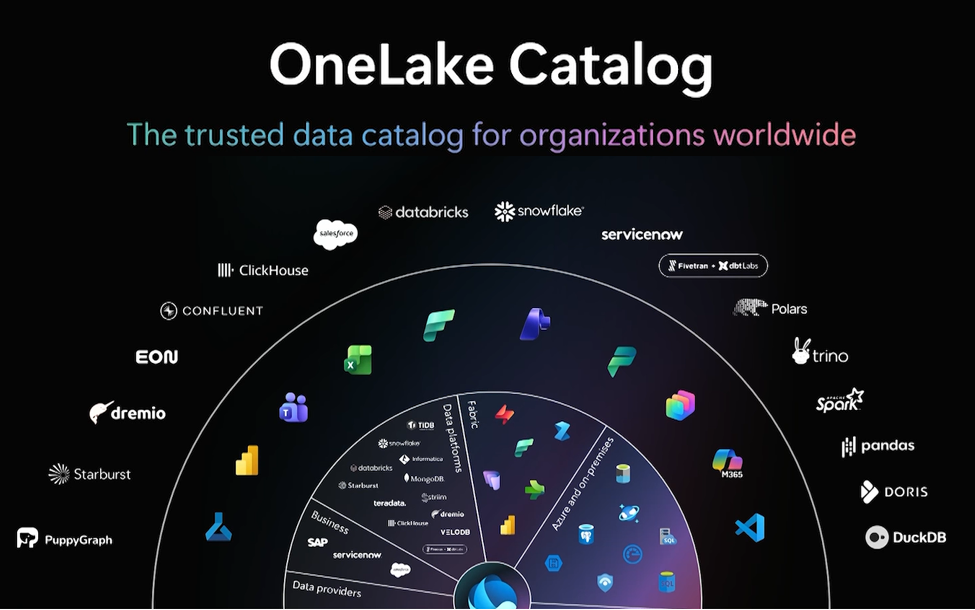
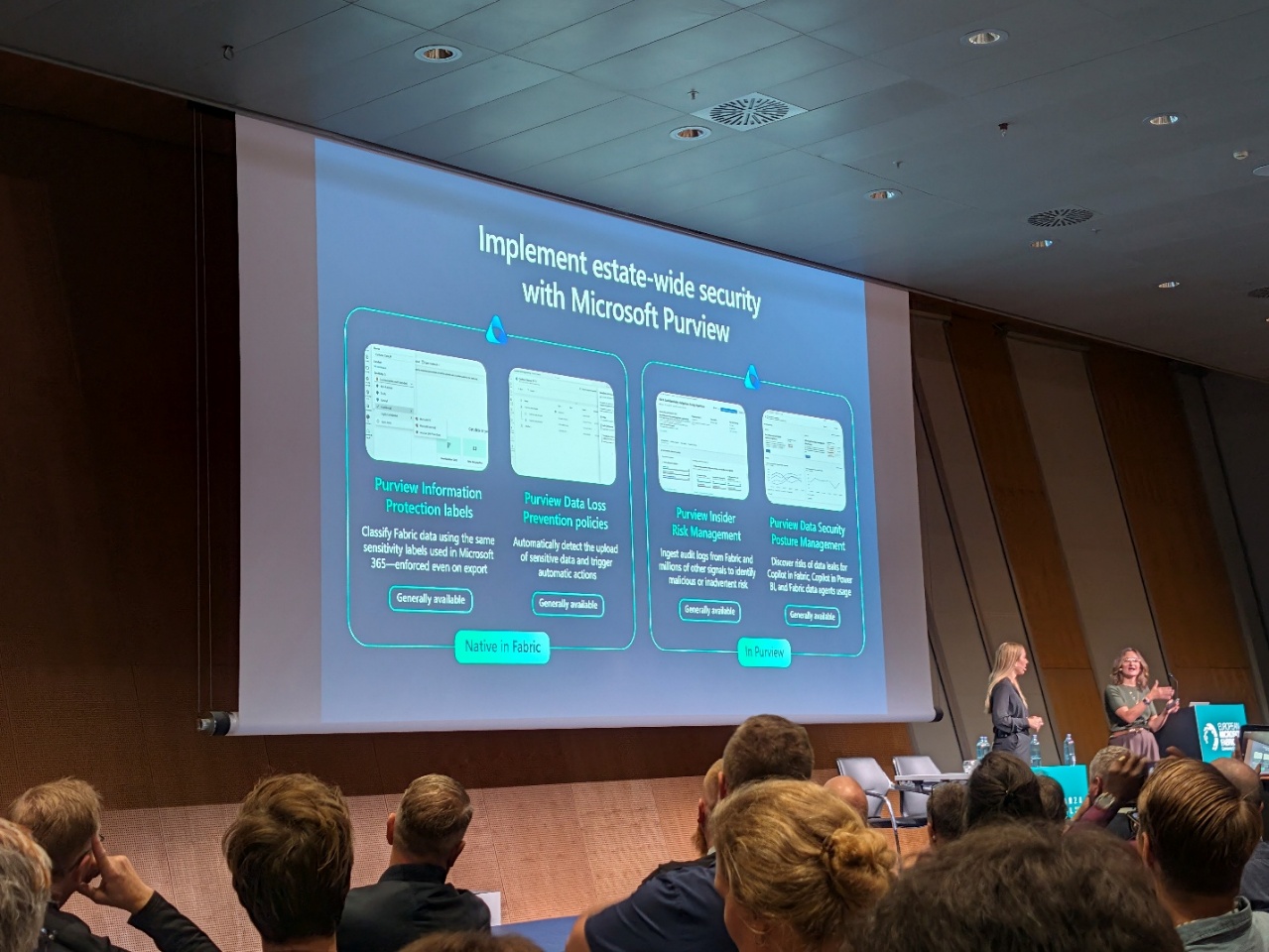
The operating model must also cover the data itself. The OneLake catalog is becoming a central place for discovery, lineage, governance and ownership information within Fabric. Microsoft Purview complements it with protection, auditing, risk and compliance capabilities, including sensitivity labels and Data Loss Prevention.
Microsoft is also strengthening Fabric's security capabilities to better support organizations with strict regulatory requirements, such as those in banking and healthcare. Recent announcements include more granular OneLake access controls, improved visibility into permissions, stronger safeguards against unintended data exports and expanded protection for data used in Copilot experiences. Microsoft is also improving SQL auditing and has announced upcoming support for customer-managed keys across Data Engineering workloads. These developments give organizations more control over how sensitive data is accessed, processed and shared, although compliance still depends on the specific workload, configuration and regulatory requirements.
None of these controls, however, can fix inconsistent customer identifiers or stale source data. Data products still need named owners, visible lineage and agreed business definitions before they can provide reliable context for AI agents.
Openness adds another dimension. Fabric can increasingly work alongside external data engines and platforms, including Snowflake and Azure Databricks, without requiring organizations to migrate their entire data estate first. OneLake shortcuts can reference data in its existing location, while mirroring can either access data in place or maintain a synchronized replica in OneLake, depending on the source. This supports gradual modernization: teams can query shared data, combine it with other sources and create new datasets or data products using the consuming platform's processing capabilities. Even when the original data remains read-only, these downstream operations introduce new dependencies and governance considerations.
Organizations therefore need to know which data source is authoritative, who can access or modify it, who is responsible for downstream transformations and how changes affect other data products and users. The same applies to shared business definitions: organizations need clear ownership and a consistent way to manage changes across platforms. Open standards can reduce technical lock-in, but they do not remove the need to govern data and shared business meaning.
More information:
Govern and manage your Fabric data with the OneLake catalog
Connecting apps, databases, and AI on one foundation
Use Microsoft Purview with Microsoft Fabric
Unify data with OneLake shortcuts and mirroring
Database Hub overview in Microsoft Fabric
What it means for data engineers and analytics teams
For data engineering

Project Osmos, the Fabric Data Engineering Agent currently in preview, shows how engineering work may change. It can inspect data, plan and carry out longer-running tasks, generate and execute Spark notebooks, write Delta tables and validate results against Fabric resources. The interesting development is not simply code generation. It is the prospect of defining an engineering outcome and having an agent work toward it within agreed constraints and acceptance criteria.
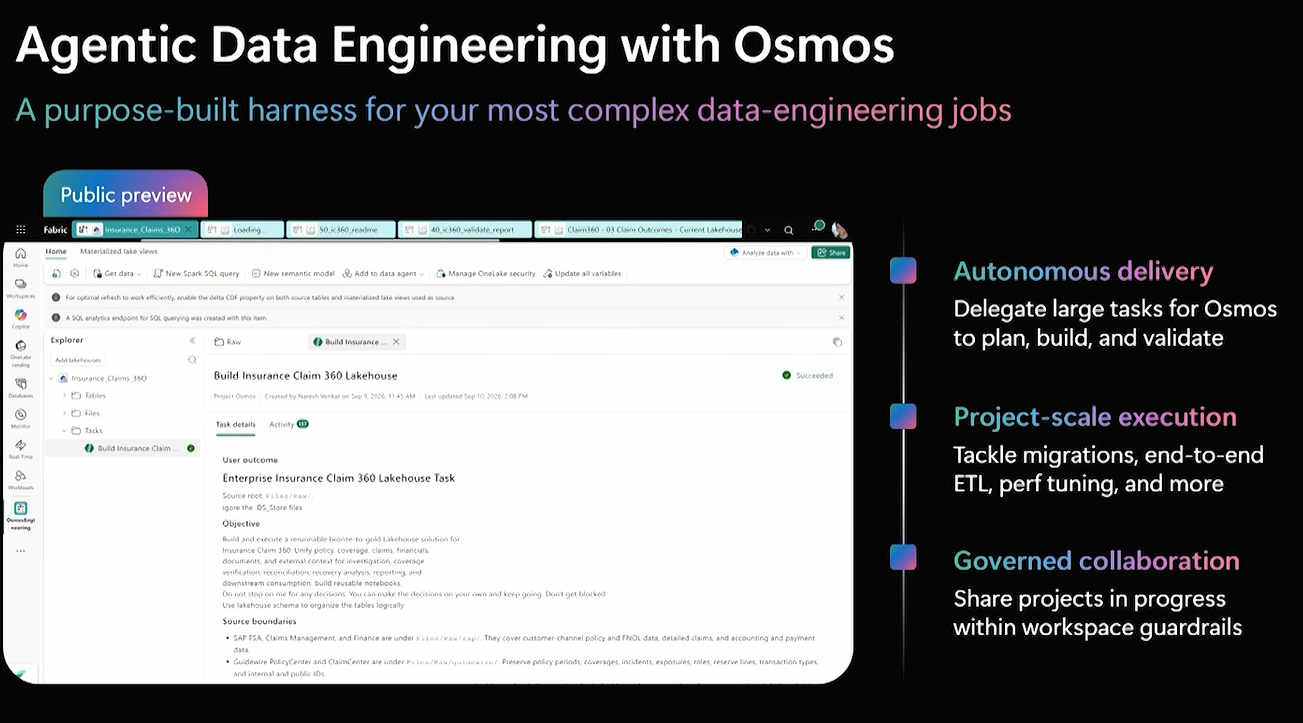
As agents take on more implementation work, the quality of the initial requirements becomes even more important. A pipeline may execute successfully and still produce incorrect results if business rules, assumptions about source data or expected behavior have not been clearly defined. Faster implementation does not necessarily mean faster delivery of a reliable solution. Teams need to be precise about what they expect the agent to produce, how exceptions should be handled and what conditions must be met before the results can be trusted.
That makes engineering discipline more important, not less. Before an agent can safely modify a Lakehouse, teams need explicit write boundaries, predictable behavior when tasks are rerun, appropriate permissions and clear validation responsibilities. Microsoft's guidance for Project Osmos reflects the need for these controls. We see it as an indication of where data engineering is heading rather than a production-ready capability today. Strengthening deployment, monitoring and validation practices remains the immediate priority.
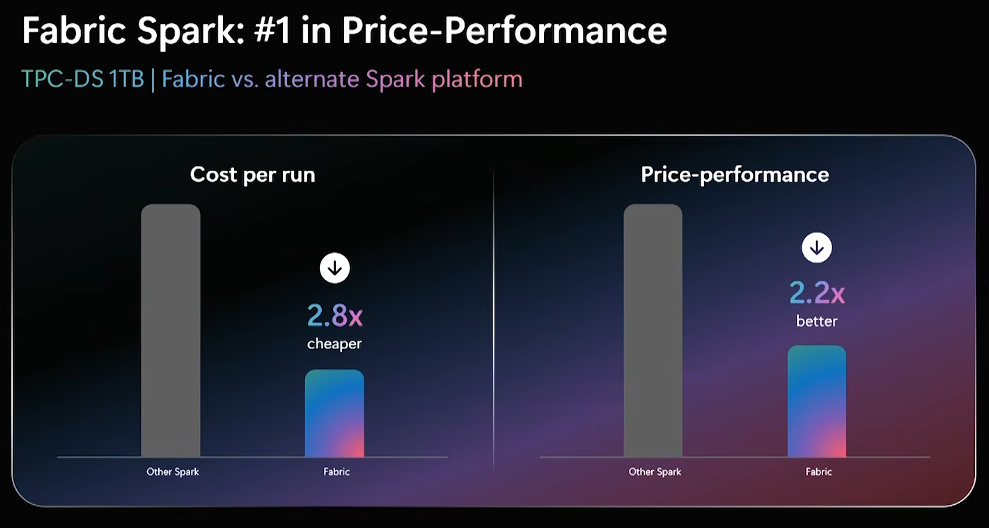
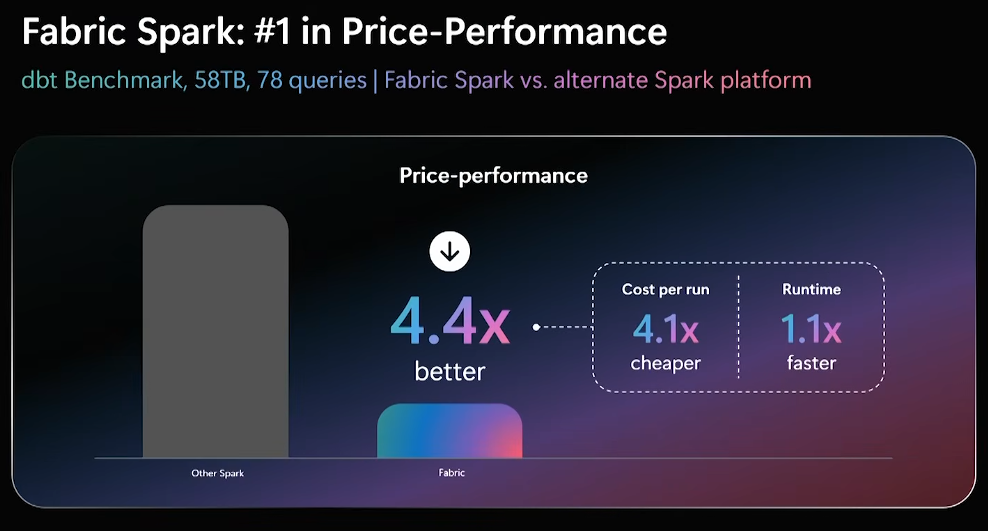
Spark performance was another strong engineering theme at FabCon. In Microsoft’s benchmarks, Fabric Spark delivered 2.2x better price-performance on TPC-DS 1TB and 4.4x better price-performance in a 58TB dbt benchmark, driven largely by lower cost per run and runtime improvements. For engineering teams, this reinforces that Fabric is investing not only in new capabilities, but also in making large-scale Spark workloads more efficient to operate.
Finally, Deployment Plans address a more familiar problem. Also in preview, they let teams specify the order in which items are deployed and run actions before or after individual steps. That matters when Fabric lineage cannot infer every dependency. A Lakehouse might need to be deployed first, followed by a Notebook that creates or populates tables, before a dependent Warehouse or semantic model is deployed.
For enterprise teams, this offers a way to move part of the release process out of manual runbooks and into a repeatable workflow. The limitations are important, though. If an action fails, the plan stops without rolling back items already deployed and a single run cannot currently target multiple workspaces. They are a useful addition to the deployment toolbox, not a replacement for established CI/CD practices.
.png)
Those announcements point to better performance and more automation in data engineering, but they also reinforce the importance of well-defined requirements, controlled delivery and reliable validation. As more implementation tasks become automated, engineers will need to pay more attention to defining the expected results, managing dependencies and ensuring that what is delivered meets the business needs.
More information:
What is Fabric data engineering agent (Project Osmos)?
What is a deployment plan in Microsoft Fabric?
For analytics and business users

Conversational analytics is changing how business users interact with data. Fabric IQ in Copilot Chat and Cowork means business users can ask questions in the tools where they already work, without first opening a BI report. They can ask questions in their everyday tools rather than opening a BI report first. For analytics teams, that changes the work involved in making a model usable. Report design still matters, but so do measure descriptions, synonyms, security settings and the clarity of business definitions. Those details increasingly shape the answers people receive.
A conversational analytics pilot should be judged by more than adoption numbers. The useful measures are how quickly people reach reliable answers, whether they understand the definitions behind them and how much-repeated manual analysis the experience removes. We would begin with one business domain that already has a trusted semantic model and a measurable use case, then expand based on what works. Making every model conversational on day one would be a poor substitute for doing that groundwork.
Power BI reports are not being replaced - the delivery model is widening
Some of the discussions after FabCon suggested that the forthcoming "Modern Report" experience spells the end of Power BI reports. That reading misses Microsoft's emphasis on "More Power for Power BI." The new experience builds on Fabric Apps, allowing teams to start from a trusted semantic model and create purpose-built applications for workflows, data entry, writeback and business actions. It widens the options available to users; it does not make conventional reporting obsolete.
Power BI reports remain a strong choice for governed analysis, reusable visual exploration, executive reporting and broad distribution. Their authoring tools and lifecycles are well understood, even when serious report development calls for careful semantic modelling, DAX, user-experience standards, testing and controlled deployment. There is also an important shift in how traditional Power BI reports can be developed. Moving from the single-file PBIX approach to Power BI Projects (PBIP), with PBIR for report definitions and TMDL for semantic models, makes much of the development process accessible through structured, text-based files. Individual report pages and visuals can be versioned, compared and modified programmatically. This opens more opportunities for collaboration through Git, reusing report templates, applying consistent changes across multiple reports and introducing more automated validation and deployment processes.
These changes also create new opportunities for agentic report development. Coding agents can increasingly work directly with report definitions, helping teams create or modify visuals, apply formatting and automate repetitive development tasks. Microsoft's emerging Power BI agentic tooling extends this approach to report planning, authoring and validation. Combined with source control and CI/CD practices, it offers a way to make conventional Power BI delivery faster and more consistent. However, AI-generated changes still need to be reviewed for analytical correctness, usability and compliance with established development standards.
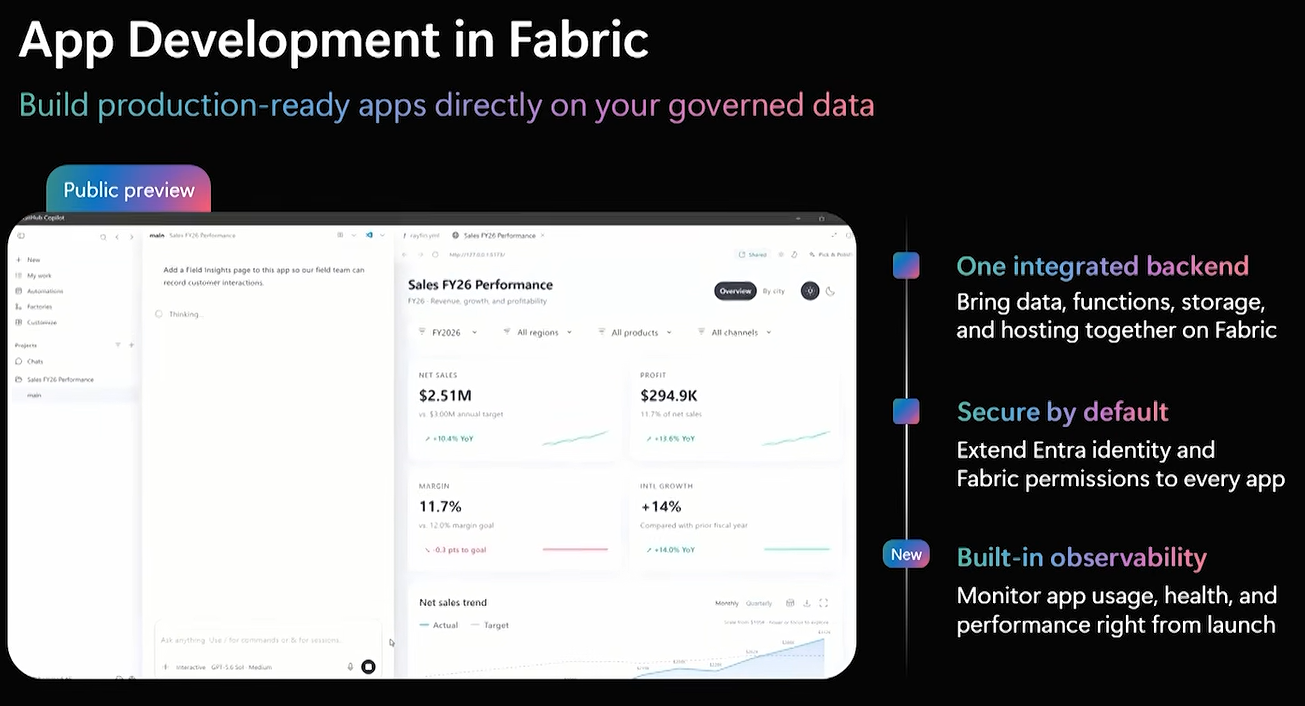
Fabric Apps suit a different kind of requirement: a tailored interface in which someone needs to enter data, work through a scenario or act alongside the analysis. LLMs and coding agents can make an initial application surprisingly quick to build. Supporting it is another matter. Once the codebase grows, teams need application architecture, security, testing, deployment and debugging skills. Without those practices, maintaining an AI-generated app may be harder than updating a report.
The sensible choice depends on the work users need to do, not on which interface is newest. A report may be the right place to understand a result, Copilot may help explore a question, while Fabric Apps are emerging as a strategic direction for richer, more sophisticated data experiences particularly where requirements go beyond traditional reporting to custom visualizations, user input, write-back capabilities, and more complex business workflows. This direction is becoming more accessible, with Microsoft announcing plans to extend Fabric Apps and Fabric Database capabilities (up to 1 GB per app) to Power BI Pro and Premium Per User customers at no additional cost, without requiring separately purchased Fabric capacity. Both traditional reports and custom applications can increasingly benefit from AI-assisted development, but each comes with different delivery, governance, and maintenance responsibilities. They can all build on the same governed semantic foundation, provided the organization is prepared to support each one.
More information:
Create a Power BI report in enhanced report format
Real-Time Intelligence connects insight with action
Another important part of Fabric's evolution is Real-Time Intelligence (RTI). While traditional analytics help organizations understand performance and identify trends, many operational decisions depend on recognizing changes as they happen. Fabric brings these capabilities together through Eventstreams and Eventhouse for processing and analyzing live data, with Activator detecting important conditions and triggering alerts or automated workflows. Business Events add another dimension by allowing teams to exchange meaningful business signals across applications and processes using shared event definitions.
Porsche Cup Brasil provides a practical example. The racing series uses Fabric to process live vehicle telemetry, helping engineers identify anomalies and respond while cars are still on track.
The Porsche Cup Brasil story also reminded us of a project we delivered with Ethara, the organizer of the Formula 1 Abu Dhabi Grand Prix, in late 2023, around the time Fabric became generally available. Our team connected operational data sources and built Power BI dashboards with mobile access to help event teams follow developments throughout race weekend. The two projects addressed different needs: Porsche Cup Brasil focuses on vehicle telemetry, while our work focused on event operations. Looking back, the progress in Fabric's real-time tooling is clear. Eventstreams, Eventhouse, Activator and Business Events now provide more integrated ways to move from live signals to analysis, alerts and business action.
This becomes particularly relevant as organizations connect analytics with AI agents and operational systems. The opportunity is not simply to process data faster, but to respond to changing business conditions with the right context and controls. That requires clear business rules, trusted data, defined responsibilities and decisions about when automation is appropriate. RTI therefore has an important role in closing the gap between insight and action, bringing organizations closer to a continuous cycle of understanding, decision-making and improvement.
More information:
Trusted AI starts with Microsoft Fabric, Real-Time Intelligence, and IQ
From Data Platform to Enterprise IQ: Data and AI become one conversation
Fabric is no longer serving data only to people. It is increasingly providing business context to AI systems and connecting that context to applications, agents and business actions. That makes it harder to treat data strategy and AI strategy as separate conversations.
A trusted foundation can support a Power BI report, a Copilot conversation, a Fabric App or an agent. Choosing among those interfaces matters, but the more consequential question is whether an organization can govern what it builds, keep it working and measure its effect on decisions and business outcomes.
The next stage of enterprise AI should not be a race to deploy more agents. Useful autonomy depends on accessible, reliable data, shared business definitions, security and a clear operating model. People still need to own processes, decide where autonomous action is appropriate and assess whether the results justify the investment.
This is the challenge we address at Elitmind through our Enterprise IQ approach. We see Enterprise IQ as an organization's ability to turn data into knowledge, make informed decisions, take action and continuously learn from the results. Our maturity model assesses eight dimensions: information foundation, enterprise ontology and shared business meaning, analytics, AI and agents, governance and trust, observability and quality, value and cost discipline, and continuity and resilience. The assessment helps organizations understand where they stand today, identify gaps and establish priorities for improvement.
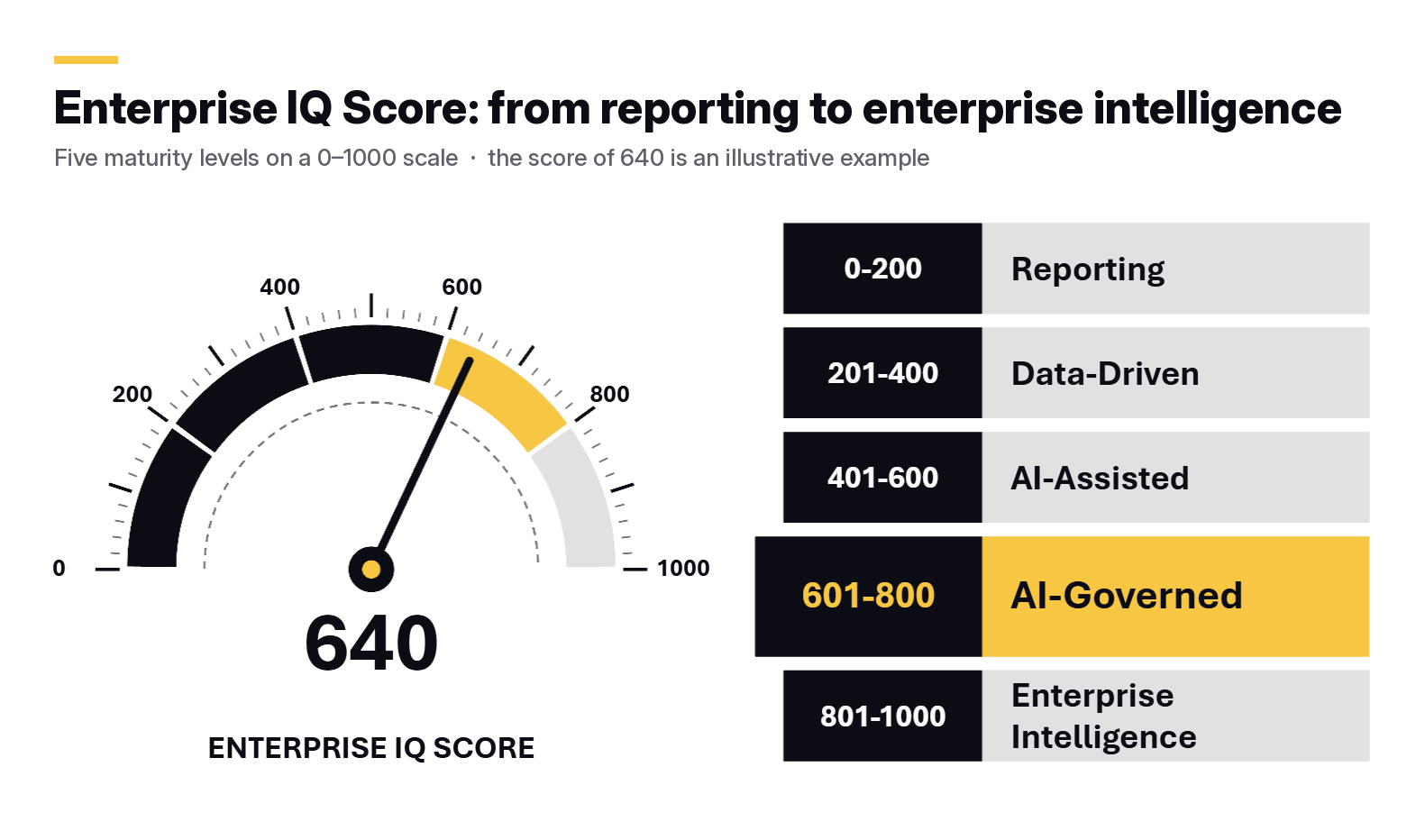
But assessment is only the starting point. At Elitmind, we combine business advisory, data strategy, platform engineering, governance, analytics and AI implementation to turn those priorities into practical solutions. Our Enterprise IQ architecture brings together a centrally managed AI foundation with shared security, governance and operational controls, alongside business-focused applications and agents. Elitmind accelerators and expert teams support implementation, while managed operations help organizations maintain, govern and improve these capabilities over time. The aim is to connect technology investments with the business processes and outcomes they are intended to support.
Reporting remains an important part of that capability, but it is only one step toward value. Organizations need to move from understanding what happened to making better decisions, acting and learning from the results. This continuous cycle is what turns Data & AI investments into a lasting business capability rather than a collection of tools.
From Data & AI technology to business action
.png)
FabCon made Microsoft's technology direction clearer. The harder work remains within each organization: establishing shared business meaning, assigning ownership, choosing the right experiences for different needs, and ensuring that technology investments translate into measurable business outcomes.
Technology creates the opportunity. Turning insight into action, and action into learning, is what makes it valuable.
Meet the authors







.png)







.png)


.png)
.png)










.png)